AI Headshots for Creative Professionals — When They Work (And When They Don't)
Actors, models, and performers face unique challenges with AI headshots. Here's where AI helps and where traditional photography wins.
Portrait Pro Team
Image Studio
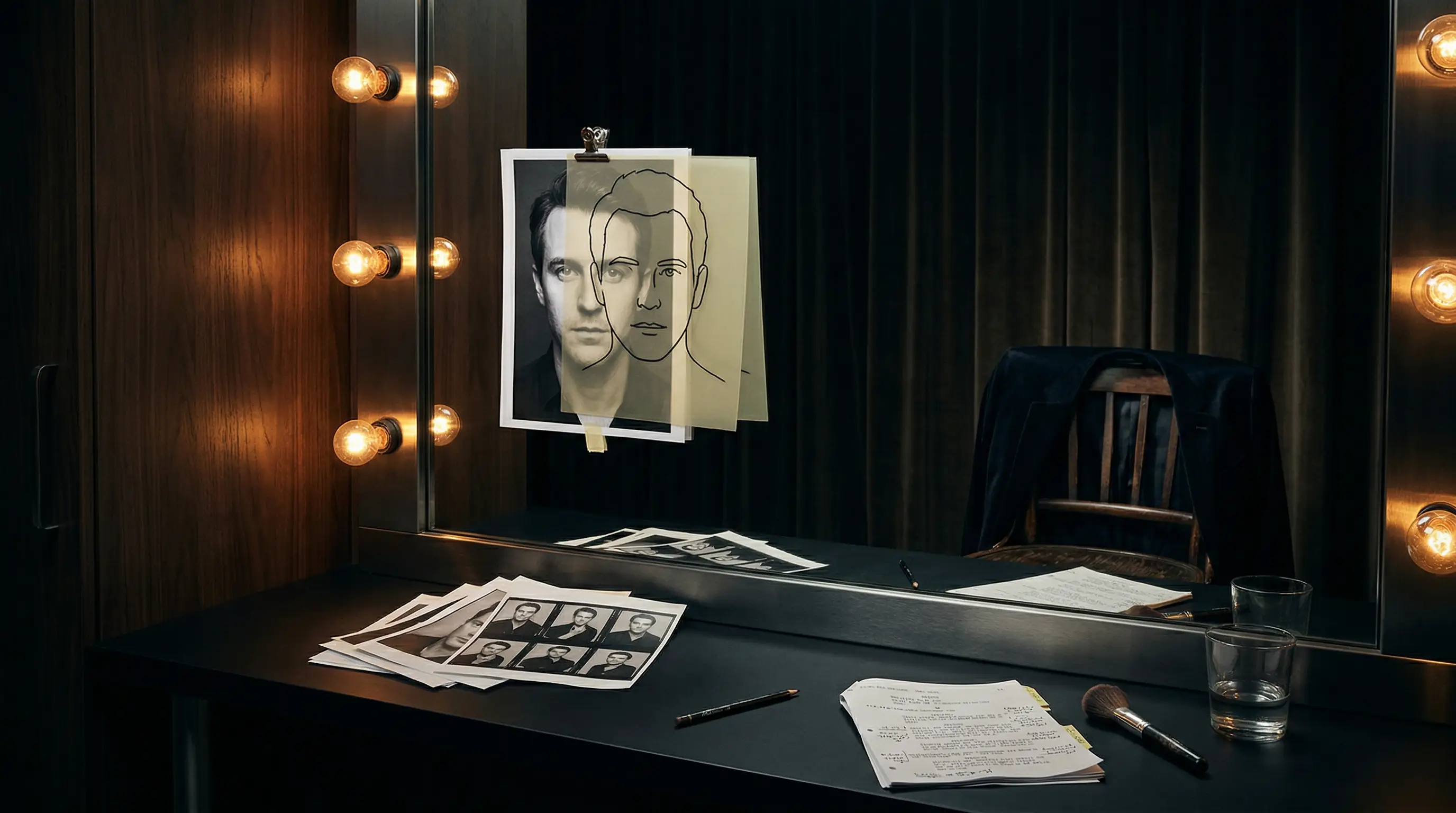
The debate around AI headshots hits differently for creative professionals.
An accountant using an AI-generated LinkedIn photo might get a raised eyebrow at worst. An actor submitting an AI headshot to a casting director? That can end a career before it starts.
But here's what's interesting: some actors are quietly using AI headshots to book more auditions. Not by faking their appearance, but by solving a problem traditional photography has never solved well — showing range.
If you're a performer, model, musician, or creative entrepreneur, you need to understand where the landmines are before you upload a single selfie. This guide covers what casting directors actually think, how working actors are using AI strategically, and when to absolutely stick with a human photographer.
The Stakes Are Different for Performers
For most professionals, a headshot is a credibility signal. For actors and models, it's a casting tool. The standards aren't just higher — they're completely different.
Casting directors have one consistent complaint that predates AI: when an actor walks into the room and doesn't look like their headshot. This has been the industry's top gripe for decades. Over-retouching, outdated photos, and now AI-generated images that idealize features all trigger the same penalty.
The word "blacklisting" comes up frequently in casting circles. Not because a headshot looks too polished, but because it creates a trust violation. A casting director who calls you in based on your photo and finds a different person in the audition room doesn't just pass on you for that role — they remember. They tell colleagues. In the tight-knit theater and film communities, that reputation damage spreads fast.
This is why the advice for actors differs so sharply from corporate professionals. For a marketing director, a slightly over-smoothed LinkedIn photo is forgettable. For an actor, it can be disqualifying.
What AI Actually Does to Your Face
Understanding the risk requires understanding what happens when you upload photos to an AI generator.
AI headshot tools are trained on millions of images of what "professional headshots" look like. They apply those patterns to your photos. The result is an image that reflects the average of professional headshots — not your specific face, your specific casting type, or your specific emotional range.
Here's what tends to get altered:
- Facial symmetry gets normalized. The slight asymmetries that make your face distinctive get smoothed toward a statistical average
- Skin texture disappears. Real pores, scars, and imperfections get averaged out into a slightly rubbery, "AI glow"
- Eyes lose specificity. The subtle micro-expressions that signal personality get replaced with algorithmic approximations of "confident" or "approachable"
- Casting type gets muddled. The specific quality that makes you right for "quirky best friend" or "intense antagonist" gets blended toward generic "professional"
For corporate headshots, these changes are often acceptable or even desirable. For actors, they strip away the exact qualities casting directors are looking for. Your "imperfections" aren't flaws — they're character. A small scar, an asymmetrical smile, intense eyes — these are booking tools, not problems to solve.
How Some Actors Are Using AI Successfully
Despite the risks, some working actors are using AI headshots strategically — and getting results. The key is they're not using them to replace their main headshot. They're using them to solve a specific, expensive problem: showing range without booking multiple photo sessions.
The economics of traditional actor headshots create a paradox. To compete for diverse roles, you need headshots showing different looks: commercial, theatrical, period, gritty, polished. At $300-$500 per session, building that range costs $2,000-$4,000. Most working actors can't afford that, so they submit the same headshot for every role — and get typecast.
AI offers a workaround. For under $50, actors can generate 15-20 variations showing themselves in different styles, eras, and character types. A contemporary headshot won't get you seen for a Western. But a period-styled AI variation might — and if you can actually pull off that look in person, it works.
The strategy successful actors report:
- Maintain authenticity within reach. Create character looks you can genuinely embody. An AI-generated cowboy photo when you've never ridden a horse wastes everyone's time
- Organize by genre. Upload the appropriate variation when submitting for specific role types
- Be transparent. Some actors note which headshot represents their current look for callbacks
Casting director Michael Chen, quoted in Stage and Cinema, confirms this approach can work: "When I'm casting a western, seeing an actor in period-appropriate styling helps me visualize them in the role, even if I know it's AI-generated. It shows they understand the assignment."
The Legal and Ethical Minefield
Beyond the creative concerns, AI headshots carry specific risks for performers that don't apply to other professions.
Rights and ownership. Many AI platforms include terms of service that grant the company broad rights to use generated images. For a corporate employee, this is usually irrelevant. For an actor whose face is their product, signing away rights to AI-generated versions of their likeness creates long-term liability. Some platforms could theoretically use your generated likeness in marketing or even license it to others.
Union considerations. SAG-AFTRA and other performers' unions have taken strong positions on AI. Using AI-generated headshots for union productions could create contractual issues, especially if the image significantly alters your appearance. The union's broader fight against AI replication of performers extends to how members present themselves.
Platform policies. Major casting platforms like Backstage, Casting Networks, and Actors Access don't explicitly ban AI headshots — yet. But their submission guidelines emphasize authenticity and professional photography. As detection tools improve, platforms may flag or reject AI-generated images. Getting your submission filtered out automatically beats getting rejected by a human, but both mean you don't get seen.
The diversity problem. AI models trained on biased datasets can misrepresent or flatten distinctive features — particularly affecting performers from underrepresented groups. Skin tones may render inaccurately. Cultural markers get smoothed toward a Eurocentric average. For actors whose unique appearance is part of their casting appeal, this technical limitation isn't just unfair — it's professionally damaging.
When AI Headshots Make Sense for Creatives
Given all these cautions, when should a creative professional actually use AI headshots?
Personal branding, not casting submissions. Musicians, coaches, authors, and content creators need professional photos for websites, social media, and promotional materials. The stakes are lower than theatrical casting. An AI headshot that's 95% accurate works fine for your "About" page or Instagram bio.
Testing looks before investing. Considering a new hairstyle, glasses, or aesthetic? Generate AI variations showing the new look before committing. It's cheaper than a photoshoot you'll hate.
Filling gaps temporarily. Between professional sessions, an AI headshot beats a five-year-old photo that no longer resembles you. Just update with real photography as soon as possible.
Budget-constrained early career. If you're just starting out and genuinely can't afford a photographer, a high-quality AI headshot is better than a badly lit selfie. But budget for real headshots as soon as you can — it's a career investment, not an optional extra.
Specific platform requirements. Some platforms need frequent photo updates. If you're posting daily content and need fresh thumbnails, AI can supplement (not replace) your core professional photos.
When to Absolutely Use a Real Photographer
Some situations require traditional photography, full stop.
Theatrical and commercial auditions. Until the industry explicitly accepts AI headshots, submitting one risks getting filtered out before a human sees your work. The trust violation cost is too high.
Agent submissions. Agents want to see what you actually look like. An AI-altered photo that creates mismatched expectations makes their job harder — and they'll pass on representing you.
Model digitals and comp cards. The fashion and modeling industry relies on accurate measurements and unretouched images. AI-generated distortion, however subtle, can cause problems at castings where fit and proportion matter.
Any situation requiring proof of appearance. If someone meeting you needs to recognize you from your photo — conference speaking, media appearances, client meetings — accuracy trumps polish.
Union and professional contexts. When in doubt, default to traditional photography for anything union-related or where professional standards are strictly enforced.
How to Spot (and Avoid) Bad AI Headshots
If you do use AI for headshots — whether for creative exploration or professional use — learn to spot the giveaways that damage credibility.
The uncanny skin texture. Real skin has pores, subtle color variation, and texture. AI skin often looks slightly rubbery, overly smooth, or inconsistently lit. Zoom in on the nose and cheek areas — these are dead giveaways. If you want a broader business-use diagnostic for this problem, see why most AI headshots look fake and how to avoid it.
The telltale eyes. AI eyes can look too white, slightly misaligned, or emotionally vacant. Look for consistent catchlights (reflections of light sources) that match the supposed lighting setup. Mismatched catchlights mean the AI invented the lighting.
Hand weirdness. If hands are visible, check proportions. AI still struggles with fingers, thumbs, and hand positioning. Extra fingers, wrong joint placement, or hands that seem attached at odd angles are common tells.
Background artifacts. Look for blurry patches in backgrounds, inconsistent focus, or objects that seem to melt into each other. AI often generates plausible-looking but physically impossible spaces.
Clothing that doesn't make sense. Buttons that don't align, fabric that folds unnaturally, or outfits that seem to blend into backgrounds suggest the AI invented the wardrobe rather than photographing real clothing.
The "wedding at a WeWork" problem. Many AI generators default to generic professional contexts that don't match any real environment. If your headshot looks like it was taken at a vaguely corporate event in an undefined space, it's probably not usable.
A Practical Approach for Creative Professionals
If you're a performer or creative entrepreneur considering AI headshots, here's a decision framework:
Start with your primary goal. If you're booking theatrical roles, invest in a photographer who understands actor headshots. If you're building a coaching business and need website photos, AI might work fine.
Test for recognition. Before using any AI-generated photo professionally, show it to people who know you. Can they recognize you immediately? Does it look like you on a good day, or like a different person entirely?
Use AI for expansion, not replacement. Keep one strong professional photo as your anchor. Use AI to create variations for specific contexts — not as your default image.
Read the terms of service. Understand what rights you're granting to the AI platform. If the terms allow them to use generated images commercially, consider whether you're comfortable with that.
Stay current on industry standards. The acceptance of AI headshots is evolving. What's acceptable for social media today might be banned on casting platforms tomorrow. Check current guidelines before submitting.
Budget for real photography eventually. AI headshots are a tool, not a permanent solution. Plan to invest in professional photography as your career progresses.
The Bottom Line
AI headshots for creative professionals exist in a complicated middle space. They're not the career-destroying mistake some traditionalists claim, nor are they the new solution AI companies promise.
For actors specifically, the risks currently outweigh the benefits for primary headshots. The industry's trust-based evaluation system penalizes anything that looks like misrepresentation — even unintentional. Until casting directors explicitly accept AI-generated images, using one is gambling with your professional reputation.
But for adjacent creative fields — musicians, coaches, content creators, authors — AI headshots offer a legitimate option for professional imagery at a fraction of traditional costs. The key is matching the tool to the context. Lower stakes, lower risk. Higher stakes, stick with photography.
The performers who navigate this well won't be the ones who reject AI entirely, nor the ones who embrace it uncritically. They'll be the ones who understand exactly what they're using, why they're using it, and what could go wrong.
Your headshot is your calling card. Make sure it's telling the truth — or at least, the truth you intend to tell.
Portrait Pro helps creative professionals generate professional headshots for branding, social media, and promotional use. For theatrical auditions and casting submissions, we always recommend working with a photographer who understands your specific casting type and market.
Related Articles
AI Product Photography Guide for Small Stores
How small stores can use AI product photography for marketplace listings, social posts, and site assets without losing consistency.
LinkedIn Headshot AI Guide for 2026
A practical guide to LinkedIn headshot AI: likeness, lighting, trust signals, usage rights, and whether the final image earns the meeting.
Best AI Headshot Generators Compared (2026): 7 Services Tested on Quality, Speed, and Price
We tested 7 AI headshot generators on the same photo set. Here's what actually works — and what costs way more than it should.
Ready to create images that convert?
Generate headshots, thumbnails, and covers that stay on brand—no photo shoots or design rounds.
Launch Image Studio