272% More Matches: What 1.8 Million Dating Profiles Reveal About Photos
Research from 1.8M dating profiles reveals exactly which photos get matches. Data-backed strategies for men and women, platform-specific tactics, and the truth about AI-enhanced photos.
Portrait Pro Team
Image Studio
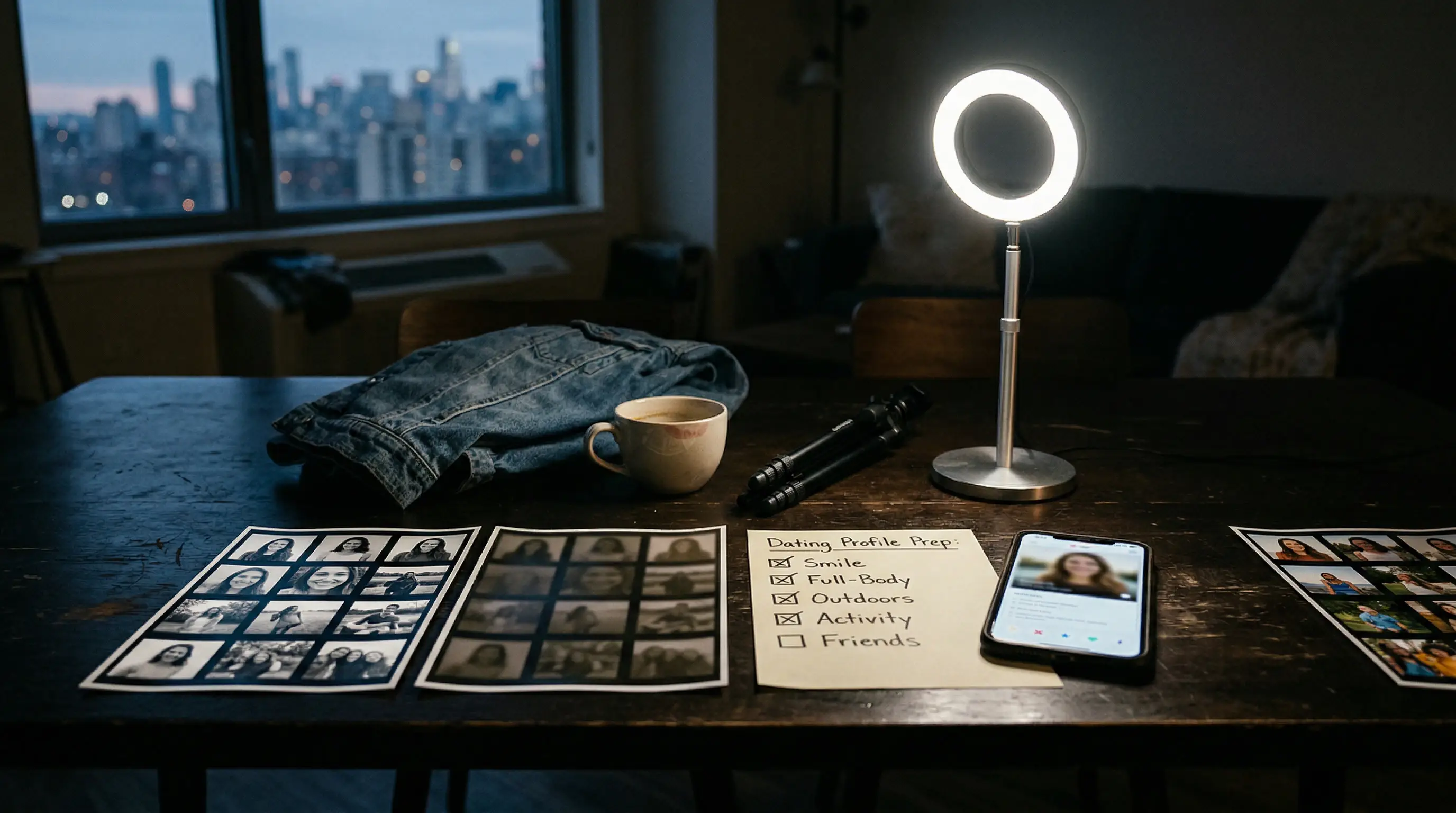
A study of 1.8 million dating profiles found that high-quality photos deliver a 34.2% match rate. Amateur smartphone photos: 12.6%. Poor quality: 4.7%.
That's not a marginal improvement. High-quality photos generate nearly three times as many matches. Over a year of swiping, that's the difference between finding a relationship and deleting the apps.
The data comes from an 18-month analysis across Tinder, Hinge, Bumble, and smaller platforms. Researchers tracked 47 different photo characteristics to determine what actually drives matches. The findings challenge most dating advice and reveal specific strategies that differ significantly between men and women.
The 90% Reality
Photo quality isn't a factor in dating success. It is the factor. Users make swipe decisions in 1.9 seconds on average. Your bio, prompts, and job title barely register.
The research found that 90% of first impressions on dating apps are based on photos alone. The average user forms a complete judgment within 100 milliseconds of viewing your profile. You could have the most clever bio on the platform. If your photos don't pass the initial filter, no one will ever read it.
The pipeline analysis is stark:
| Stage | High-Quality Photos | Low-Quality Photos | |-------|---------------------|-------------------| | Swipe Right | 67.3% | 12.4% | | Match | 34.2% | 4.7% | | First Message | 28.6% | 2.8% | | Date Scheduled | 8.4% | 0.4% |
High-quality photos make you 21 times more likely to get an actual date. Not 21%. Twenty-one times.
Optimizing your professional image? The same research on photo quality applies to LinkedIn profiles. See our complete guide to AI headshots that work for professional networking — the same principles of clarity, lighting, and expression that drive dating matches also drive recruiter engagement.
The Six-Photo Sweet Spot
Before diving into what works differently for men and women, the optimal photo count is consistent across genders:
| Photo Count | Match Rate | Profile Perception | |------------|-----------|-------------------| | 1-2 photos | 14.3% | 37% "incomplete" | | 3-4 photos | 21.7% | 68% "adequate" | | 5-6 photos | 28.9% | 91% "complete" | | 7-9 photos | 29.3% | 87% "complete" | | 10+ photos | 27.1% | 74% "trying too hard" |
Four to six photos is the sweet spot. Fewer than four raises suspicion. More than six creates diminishing returns. Hinge enforces this by requiring exactly six slots.
For Men: The 203% Full-Body Effect
Men face a different playing field than women. Leaked Tinder data from 2017 revealed heterosexual men have a 16% average success rate compared to women's 52%. The competition is brutal, and photo strategy matters more.
The High-Impact Photos
1. Full-body shot: +203% matches
The single biggest lever for men. This isn't about having a perfect body. It's about transparency. Women don't want surprises on the first date. Men who include a full-body shot get fewer total messages, but those messages come from women genuinely interested in their body type.
Effective full-body photos show you engaged in activities rather than stiff poses. The "cowboy shot" (mid-thigh up) works if you're not comfortable with full-length.
2. Activity photo: +45% likes
Photos showing men engaged in hobbies outperform static posed photos by 45%. Activity photos serve as conversation starters and signal an active lifestyle. Hikers match with hikers. Musicians match with musicians.
3. Clear headshot: +38% right swipes
Your first photo is everything. 52% of swipe decisions are made on the first photo alone. Clear headshots with natural smiles outperform any other photo type for the lead position.
What makes an effective headshot: shoulder-level or closer, natural lighting, neutral background, direct camera angle, genuine Duchenne smile.
4. One group photo: +12% matches
Exactly one. Men with a single group photo get 12% more matches than those with none. Multiple group photos have the opposite effect. The group photo signals social normalcy without creating confusion about who you are.
Critical: men who use a group shot as their first photo see a 42% reduction in matches. Never lead with it.
5. Pet photo: +22-69% increase
Posing with a dog increases attractiveness scores by 22% in surveys, and pet photos increase match rates by 65-69% in behavioral data. Dogs slightly outperform cats (69% vs 63%).
What Destroys Men's Match Rates
| Photo Type | Impact | |-----------|--------| | Sunglasses in every shot | -20% (hides eyes, reduces trust) | | Heavily filtered photos | -67% (75% of users are put off) | | Bathroom mirror selfies | -90% vs non-selfies | | Group photo as first image | -42% | | Beach photos | -80% likelihood of receiving likes |
The beach photo finding surprises most men. Beach photos suffer from harsh sunlight, squinting, and the cliche factor. Activity-based beach photos (surfing, volleyball) perform better than posed beach portraits.
The Men's Six-Photo Formula
- Clear headshot with genuine smile
- Full-body shot showing your build honestly
- Activity photo demonstrating interests
- One group photo proving social normalcy
- Pet photo if applicable
- Personality wildcard - travel, dressed up, or unique interest
For Women: The 166% Sports Photo Advantage
Women have more use on dating apps, but that advantage is wasted with poor photo strategy. The goal isn't just more matches. It's matches with people you'd actually want to meet.
The High-Impact Photos
1. Sports/activity photo: +166% likes
The single biggest advantage for women in the data. Women engaged in sports, fitness, or physical activities see dramatically higher engagement than standard portraits. The effect is much stronger for women (+166%) than men (+45%).
Activity photos signal health, energy, and shared interests. They also provide natural conversation starters and solve the posed-vs-candid dilemma.
2. Black and white photos: +106% right swipes
Only 3% of dating app photos use black and white, yet they're more than twice as likely to get a right swipe. Black and white photos appear more artistic and intentional, standing out from the flood of casual color photos.
3. Red clothing: +21% matches
Color psychology research confirms it works in practice. Women wearing red get 21% more matches compared to other colors. It doesn't have to be head-to-toe red. A red top, dress, or accessories provides this benefit.
4. Solo photos: +22% over group photos
Group photos create cognitive load. When someone sees a group photo, their brain works to identify which person is the profile owner. That extra mental effort creates friction, and friction means left swipes.
Never use a group photo as your first image. Limit group photos to one, positioned fourth or fifth in your lineup.
5. Minimal makeup: +19% perception
Heavy makeup reads as trying too hard or potentially hiding something. The "no makeup" makeup look performs best. You look polished, but not like you're wearing a mask.
Expression and Posing
| Expression Type | Match Rate vs Baseline | |----------------|----------------------| | Duchenne smile (genuine, eyes engaged) | +34% | | Closed-mouth smile | -19% | | Serious expression | -43% | | Overly posed smile | -53% |
The Duchenne smile, characterized by engagement of the muscles around the eyes creating crow's feet, signals genuine happiness. Fake smiles perform worse than neutral expressions.
Hinge data suggests women's best photos show: smile with teeth, look away from camera, stand alone. The "looking away" finding contradicts general advice, but looking away appears more natural and candid.
What Hurts Women's Match Rates
| Photo Type | Impact | |-----------|--------| | Selfies | -40% fewer likes | | Bathroom selfies | -90% fewer likes | | Beach photos | -47% likelihood of receiving likes | | Weird angles (high/low) | #1 turnoff, cited by 41% | | Heavy filtering | 75% of users put off |
The beach photo penalty is less severe for women (-47%) than men (-80%), but still significant.
The Women's Six-Photo Formula
- High-quality portrait with Duchenne smile, simple background, red or black clothing
- Sports or activity photo showing energy and interests
- Full-body shot in a natural setting
- One social photo clearly identifiable as you
- Lifestyle photo showing depth (travel, creative pursuit)
- Alternative look showing versatility (dressed up, different style)
Platform-Specific Strategies
The optimal approach varies by app.
Tinder: Volume and Visual Impact
Tinder's 76% male-to-female ratio creates intense competition. Users swipe through hundreds of profiles during commutes, making visual distinctiveness crucial.
AI-enhanced photos perform nearly as well as professional photos on Tinder. The platform's casual reputation means users are less skeptical of polished images.
Strategy: Lead with your strongest AI-enhanced headshot, follow with activity photos showing social proof, include one full-body shot.
Hinge: Quality Across All Slots
Hinge attracts users seeking serious relationships, and its user base is more photography-savvy. The "designed to be deleted" positioning creates higher scrutiny.
Professional photos significantly outperform AI-only photos on Hinge (13.9 vs 8.4 matches per week). But profiles using a 50/50 mix of AI and professional photos achieve 16.2 matches per week, higher than either approach alone.
Strategy: Balance AI photos with professional or high-quality candid shots. The mixed approach signals both effort and authenticity.
Bumble: Approachable Over Polished
Bumble's women-first messaging attracts users seeking respectful connections. The platform employs AI detection systems and community guidelines requiring authentic photos.
Overly professional photos can read as intimidating. Slightly more casual high-quality photos perform best.
Strategy: Opt for approachable, lifestyle-oriented photos rather than corporate headshots. Warm expressions and natural settings outperform dramatic studio lighting.
The Update Effect
Photo freshness matters more than most users realize.
| Update Frequency | Impact | |-----------------|--------| | Monthly updates | +28% algorithm visibility | | Fresh profile (2 weeks) | 3x more exposure | | Photos over 4 months | -12% effectiveness | | Photos over 2 years | -44% trust factor |
Dating apps prioritize active users. When you update photos, the algorithm treats you as engaged and rewards you with more exposure. Even great photos decay in effectiveness as the algorithm shows you to fewer people.
The strategy: update at least one photo monthly. Rotate a new activity shot or swap your fifth photo. Small changes signal activity without requiring constant photoshoots.
The Authenticity Paradox
When surveyed, 78% of users claim to prefer authentic photos over enhanced ones. They'll tell you they want the "real you," that professional photos feel try-hard.
But their swiping behavior tells a different story.
Profiles with enhanced photos receive 41% more right swipes than unedited photos. The preference for authenticity is aspirational. When actually making split-second decisions, users are drawn to quality like everyone else.
This isn't hypocrisy. It's psychology. Attractive photos create a halo effect where viewers unconsciously assume positive traits (intelligence, kindness, success) based solely on appearance.
What Authentic Actually Means
Users don't want unedited photos. They want photos that feel authentic while being high quality. The sweet spot is subtle enhancement that maintains recognizability.
Photos that trigger the uncanny valley, overly perfect skin or facial features that don't quite match reality, perform worse than authentic photos. But photos that present you in the best possible light (better angles, professional lighting, flattering composition) significantly outperform unedited alternatives.
Think of it like wearing a nice outfit on a first date. You're not being inauthentic by dressing well. You're showing respect for the occasion and presenting your best self.
Is Using AI Photos Catfishing?
The short answer: it depends on how you use them.
Catfishing involves deception. Using AI photos that alter your facial features, body type, or age to the point where you're unrecognizable in person is clearly deceptive.
But using AI to enhance photos while maintaining your true appearance is not catfishing. It's optimization. Consider the analog equivalents:
- Wearing makeup is acceptable
- Dressing well for a date is expected
- Professional photographers use lighting and angles to flatter subjects
- Photo editing apps (Instagram filters, Portrait mode) are ubiquitous
The ethical line is recognizability: would someone who knows you recognize you instantly from the photo? If yes, you're on solid ethical ground. If no, you're crossing into deception.
Detection Reality
A 2026 Conjointly study found that consumers correctly identified AI images only 52% of the time. Essentially chance. The research in this study found 87% of dating app users couldn't identify high-quality AI photos when asked.
Users are remarkably sensitive to identity mismatch, but not to enhancement detection. The concern isn't "this photo is enhanced." It's "this person doesn't look like their photos."
Best Practices
- Keep at least one candid photo in your lineup for reference
- Choose AI photos that look like you on a good day, not a different person
- Video call before meeting as the community standard for verification
- Update photos within 6 months to maintain trust
- Avoid over-editing that triggers uncanny valley responses
The Cost-Benefit Analysis
A professional dating photoshoot costs $200-500 and requires scheduling, travel, and 2-4 weeks for delivery. You get 20-50 photos in a single session.
AI photo generation costs $29-49 and delivers 60-200+ photos in under an hour. You can generate new photos as often as you want.
| Factor | Professional | AI Generation | |--------|-------------|---------------| | Cost | $200-500 | $29-49 | | Delivery | 2-4 weeks | Under 1 hour | | Photo quantity | 20-50 | 60-200+ | | Update frequency | Annual | Monthly | | Match rate | 34.2% | 32.8% |
The match rate difference (34.2% vs 32.8%) is negligible. For 90% less cost and immediate delivery, AI photos offer compelling value, especially factoring in the ability to update frequently and maintain algorithmic advantage.
The Bottom Line
The debate about photo quality on dating apps is settled. Quality photos get 3x more matches, lead to 21x more dates, and determine whether you succeed or give up on the apps entirely.
The debate about AI photos is increasingly academic. With 30% of U.S. adults using dating apps and competition fiercer than ever, the question isn't whether to optimize your photos. It's whether you'll do it ethically, or watch from the sidelines while others do.
Your current lack of matches probably isn't a reflection of your attractiveness. It's a signal that your photo presentation needs improvement in lighting, clarity, or strategic selection.
The data shows this is fixable. Specific photo types deliver 45-203% improvements. Platform-specific strategies maximize your chances on each app. Regular updates maintain algorithmic visibility.
Every month you wait is another month of suboptimal results. The research is clear, the tools are available, and the investment pays for itself in time saved and better outcomes.
The only question is whether you'll act on it.
Portrait Pro creates professional-quality AI photos optimized for dating apps. Upload a few selfies, get 100+ photos in under an hour. No photographer, no scheduling, no awkward poses. Just you, on your best day, every day.
Related Articles
AI Product Photography Guide for Small Stores
How small stores can use AI product photography for marketplace listings, social posts, and site assets without losing consistency.
LinkedIn Headshot AI Guide for 2026
A practical guide to LinkedIn headshot AI: likeness, lighting, trust signals, usage rights, and whether the final image earns the meeting.
Best AI Headshot Generators Compared (2026): 7 Services Tested on Quality, Speed, and Price
We tested 7 AI headshot generators on the same photo set. Here's what actually works — and what costs way more than it should.
Ready to create images that convert?
Generate headshots, thumbnails, and covers that stay on brand—no photo shoots or design rounds.
Launch Image Studio