
Canva vs AI: When Templates Stop Being Enough
Canva is excellent for what it does. But there's a ceiling. Here's when template-based design breaks down and AI-native generation becomes the only path forward.
Image Studio Team
Image Studio
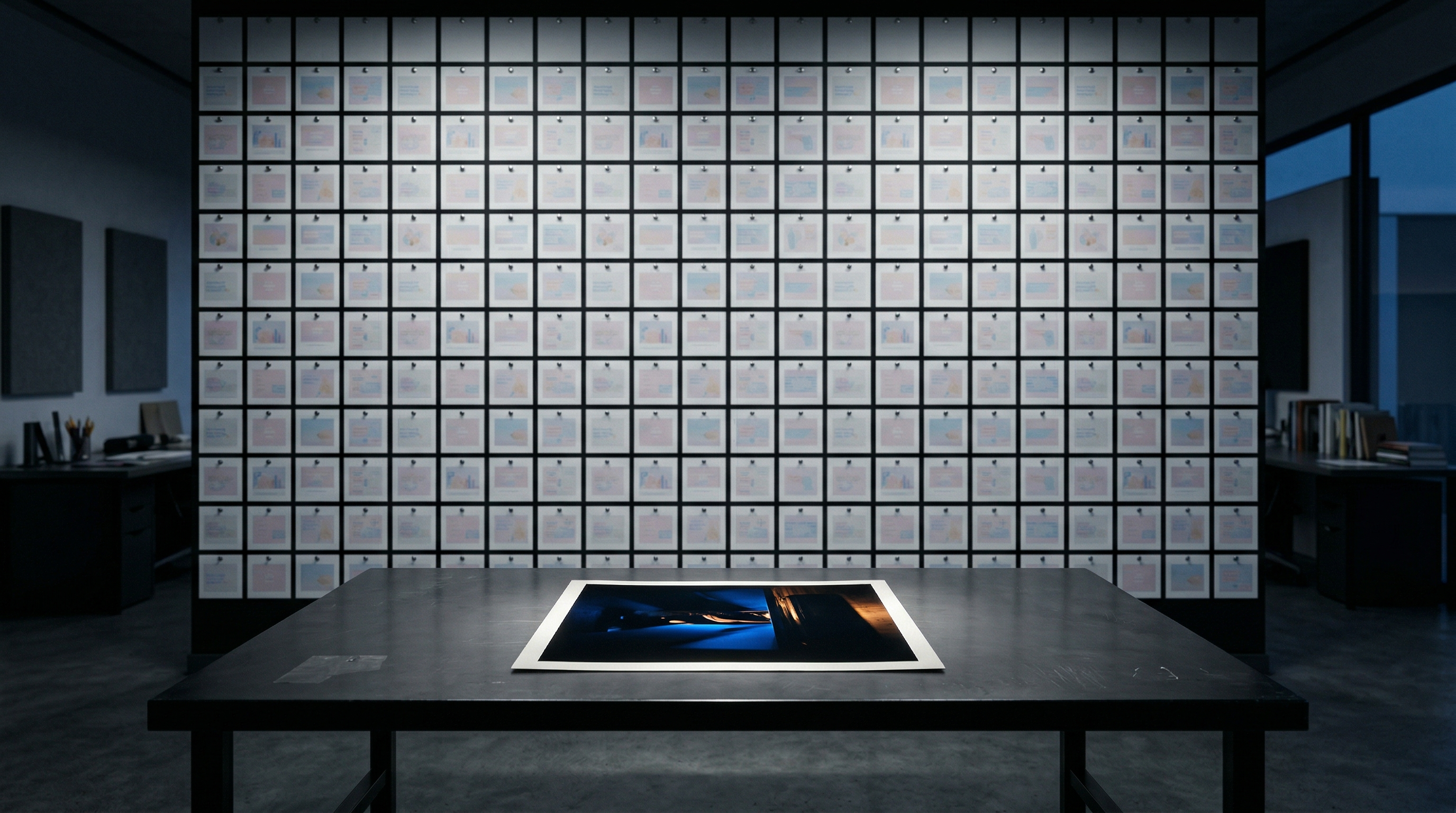
Canva is a remarkable piece of software. In fifteen years, it turned professional-grade design from a walled garden into something anyone with a browser could access. Want a pitch deck? Pick a template. Instagram carousel? Done in twelve minutes. Event flyer? Drag, drop, export.
For most design tasks, Canva is genuinely sufficient. This is not a hit piece.
But there's a moment in every growing brand's life when Canva stops working. Not because it crashes. Because you scroll through the templates and realize: every single one of your competitors is scrolling through the same templates.
The Case for Canva (Steelmanned)
Before examining where Canva breaks down, acknowledge what it does exceptionally well.
Speed to output. A non-designer can produce a passable social media graphic in under ten minutes. No software to install, no learning curve, no waiting for a designer's calendar to clear.
Consistency at scale. Brand kits let teams produce dozens of assets that roughly match. Fonts, colors, and logos stay aligned without design review on every piece.
Democratization. The small business owner who couldn't afford a graphic designer in 2012 can now create their own materials. This expanded what was possible for millions of businesses.
Ecosystem. Millions of templates, stock photos, and elements mean you rarely start from zero. Someone has already solved your category of problem.
For a bootstrapped startup, a solopreneur, or a small team moving fast, Canva removes friction. That's genuinely valuable.
The question isn't whether Canva works. It's when it stops being enough.
Where the Ceiling Hits
The Template Sameness Problem
Open Canva. Search "tech startup pitch deck." Scroll through the results.
Now imagine you're a VC seeing your fifteenth pitch this week. Every deck uses the same four templates. The same gradient backgrounds. The same stock photos of diverse teams high-fiving in glass-walled conference rooms. The same geometric accent shapes.
This is the first ceiling: template convergence. When a template library gets large enough and popular enough, the designs stop differentiating. Your Instagram looks like your competitor's Instagram because you both picked from the same top 20 templates for "minimal brand aesthetic."
A 2024 analysis of Y Combinator demo day slides found that 67% used templates identifiable to one of three Canva collections. The startups pitching "differentiation" were presenting with identical visual DNA.
The Originality Gap
Templates are, by definition, reusable. That's the point. But reusable means someone else is using them.
Search "real estate Instagram" on Canva. The top results have been downloaded millions of times. In any metropolitan market, multiple agents are posting the same layouts. The only differences are the address and the headshot.
When you need imagery that only your brand could have—a visual that didn't exist until you needed it—templates fail fundamentally. You can customize colors. You can swap photos. But the skeleton remains recognizable.
Here's the uncomfortable truth: Canva excels at helping you look like everyone else in your category. That's useful when you're getting started. It becomes a liability when you're trying to stand out.
The "Almost Right" Photo Problem
Canva's stock photo library is enormous. Millions of images. But enormous isn't the same as specific.
You need a photo of a woman working at a laptop in a coffee shop. Easy. Canva has thousands.
You need that same woman to be looking at the screen with mild frustration, mid-thirties, East Asian, wearing a blue sweater, with morning light coming from the left, and a half-empty coffee cup beside her that matches your brand's aesthetic.
That photo doesn't exist. It never will exist in any stock library, because it's too specific. So you settle for something close enough, and your design becomes slightly more generic as a result.
This is the specificity gap. Templates and stock photos converge toward the average of all possible use cases. The more specific your brand identity, the less likely you'll find pre-made assets that fit.
The Brand Evolution Problem
You built your brand kit in Canva three years ago. Primary blue, secondary coral, clean sans-serif headers. It worked.
Now you're repositioning. The market moved. Your customers evolved. You need visuals that feel different—more premium, or more accessible, or more technical. But your template library is locked to the old aesthetic. Every design you make feels like a variation on something you've already made.
Canva is excellent at maintaining consistency. It's less excellent at transformation. The same brand kit that kept you aligned now constrains what's possible.
How AI-Native Generation Is Fundamentally Different
This is not about AI being "better than" templates. It's about AI operating on a different axis entirely.
Generation vs. Selection
Template design is a selection problem. You browse, you pick, you customize. The creative constraint is: what exists in the library?
AI-native design is a generation problem. You describe, it creates. The creative constraint is: what can you articulate?
These are not interchangeable. Selection is faster for common needs. Generation is necessary for specific ones.
When you need "a tech startup pitch deck template," selection wins. When you need "a visualization of distributed infrastructure that feels alive, not mechanical, using our exact brand palette, suggesting connection without overwhelming the viewer," generation is the only viable path.
The Specificity Advantage
AI image generation doesn't browse a library. It creates to specification.
That frustrated East Asian woman at the coffee shop with morning light and the brand-matched coffee cup? You describe it. The model generates it. The photo didn't exist until you needed it—and now it exists exactly as you specified.
This is why AI-native design becomes necessary at a certain scale: your brand identity has grown too specific for pre-made assets to serve it.
Generic brands can use generic templates. Distinctive brands need distinctive imagery. There's no third option.
The Originality Floor
A template has been used before. By definition. That's what makes it a template.
An AI-generated image has never existed before. By definition. That's what makes it generated.
When differentiation matters—when your visual identity needs to feel proprietary—the distinction is decisive. You can't build a memorable brand from components everyone else has access to.
When to Stick with Canva
This isn't a replacement argument. It's a graduation argument.
Use Canva when:
- Speed matters more than originality
- You're establishing initial consistency, not differentiation
- The design task is common (pitch deck, social post, event flyer)
- Your audience doesn't yet recognize category templates
- Budget constraints make per-asset generation impractical
Canva remains excellent for these cases. Nothing here changes that.
Consider AI-native when:
- Your competitors use the same templates you do
- You need imagery too specific to exist in any library
- Brand differentiation is a strategic priority
- You're evolving visual identity, not maintaining it
- The asset will be seen by an audience sophisticated enough to recognize template patterns
The shift isn't about AI being trendy. It's about matching the tool to the design problem.
The Practical Comparison
| Need | Template-Based (Canva) | AI-Native Generation | |------|------------------------|----------------------| | Speed to first draft | Faster | Slower | | Cost per asset | Lower (subscription) | Variable | | Originality ceiling | Limited by library | Limited by description | | Brand specificity | Generic | Precise | | Competitive overlap | High | Near-zero | | Learning curve | Minimal | Moderate | | Iteration flexibility | Constrained by template | Unconstrained |
Neither column is uniformly better. The question is which constraints bind in your specific situation.
What Happens Next
The brands building visual identity today face a divergence. One path continues with templates—faster, cheaper, increasingly indistinguishable. The other path generates custom imagery—slower to start, but capable of producing assets no competitor can replicate.
This isn't about leaving Canva behind. Many brands will use both: templates for volume production, generation for hero assets and brand-defining visuals.
But if you've scrolled through Canva lately and felt a creeping sameness—if your designs feel competent but not distinctive—that's the ceiling making itself known.
The question isn't whether AI design tools are ready. They are.
The question is whether your brand has outgrown templates.
If the asset you're trying to create is a commercial book cover rather than a generic marketing graphic, the stakes are even sharper: readers decide from a thumbnail, not from your intent. For that workflow, see our guide to using an AI book cover generator for indie authors.
Image Studio generates original visuals from description, not templates. When your brand needs imagery that didn't exist until you needed it, that's where we come in.
Related Articles
How to Maintain Brand Consistency with AI-Generated Images
Practical techniques marketing teams use to maintain visual brand consistency across AI-generated images
AI Product Photography for Ecommerce: The Conversion Data for 2025
75% of shoppers rely on product photos to buy. Here's what the data says about AI product photography and ecommerce conversion rates in 2025.
AI Product Photography Guide for Small Stores
How small stores can use AI product photography for marketplace listings, social posts, and site assets without losing consistency.
Ready to create images that convert?
Generate headshots, thumbnails, and covers that stay on brand—no photo shoots or design rounds.
Launch Image Studio