
Executive Headshots That Command the Room
What separates a $50 headshot from a $2,000 one? We break down the psychology, wardrobe, and lighting decisions that make C-suite portraits feel expensive.
Portrait Pro Team
Image Studio
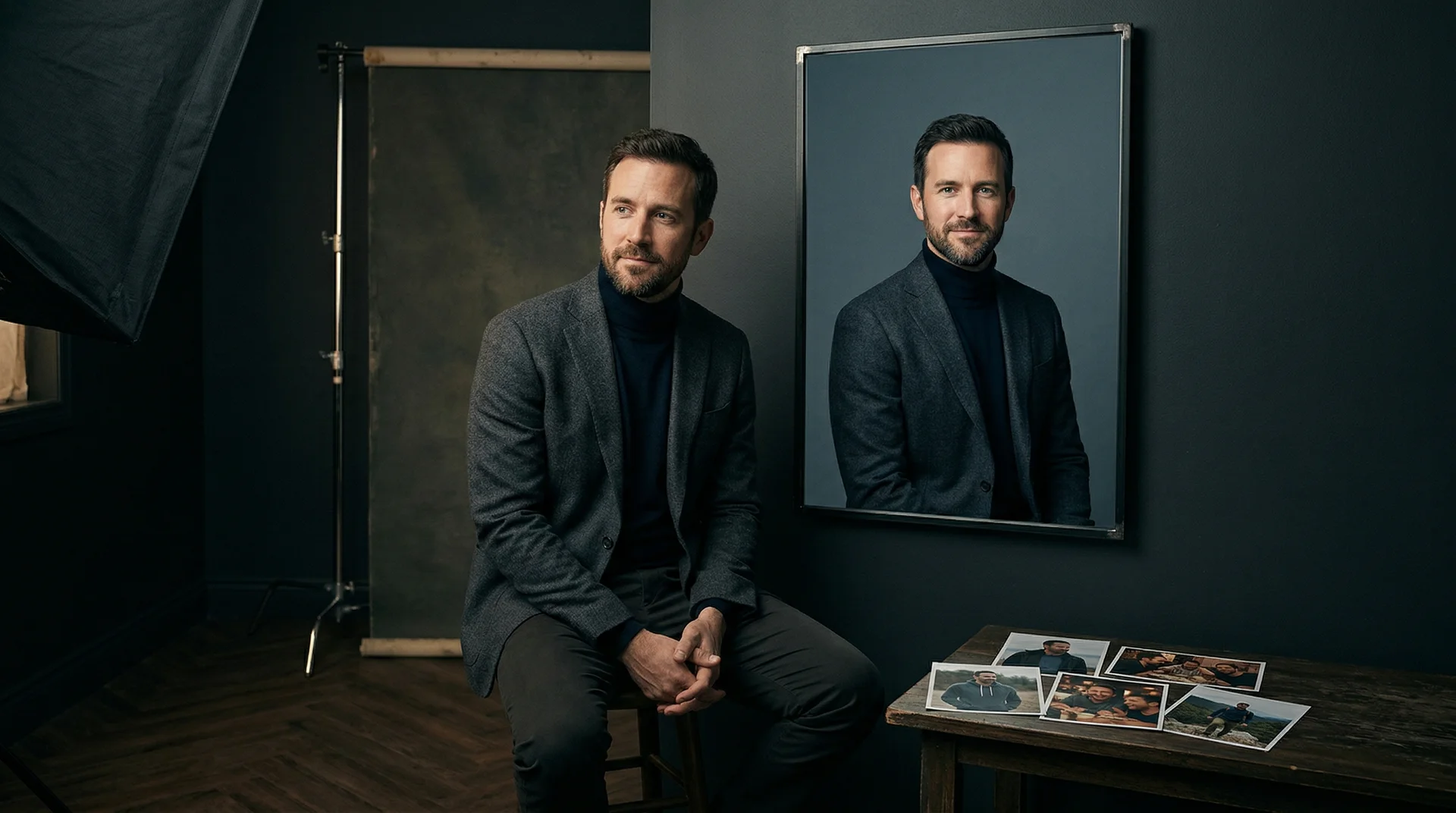
Executive Headshots That Command the Room
The $50 headshot and the $2,000 one look almost identical at thumbnail size. Same shoulders-up framing. Same neutral background. Same attempt at a confident expression. But when that image expands to full screen—when it sits at the top of an investor deck or accompanies a keynote announcement—the difference becomes unmistakable.
One reads as competent. The other reads as leadership.
This distinction matters more now than it did five years ago. In 2021, a CEO's photo might have lived on a corporate website and a LinkedIn profile. In 2026, that same image appears in podcast thumbnails, conference apps, AI-generated video avatars, investor portals, and press coverage that gets screenshotted and shared in Slack channels. The contexts have multiplied, but the physics of first impressions haven't changed: people decide if you're credible in milliseconds, and your headshot is doing that work before you've spoken a single word.
The executives who understand this aren't spending more on photography because they enjoy vanity projects. They're spending strategically because the right headshot removes friction from high-stakes introductions. When a board member forwards your bio, when a journalist pulls your photo for a profile, when a potential hire looks you up before accepting an offer—the image either supports your authority or undermines it.
Here's what actually separates executive headshots that command attention from the ones that get ignored.
The Authenticity Paradox
For years, the advice for executive portraits was straightforward: look polished, look professional, look like you belong in the role. This produced a generation of headshots that were technically perfect and emotionally vacant. Perfectly ironed shirts. Perfectly neutral expressions. Perfectly forgettable results.
The trend that defines 2026 executive photography is what photographers call "authentic polish"—images that are clearly professional but still recognizably human. The retouching is invisible. The skin texture remains. The expression suggests someone who has actually made a difficult decision, not someone who has only posed for one.
This isn't just aesthetic preference. It's strategic positioning. Research on trust formation shows that people detect mismatches between projected and actual identity within seconds of meeting someone in person. When your headshot is heavily airbrushed or uses dramatic lighting that makes you look like a different person, you pay a trust tax in every subsequent interaction. The person who viewed your polished headshot meets you and thinks, unconsciously, that something doesn't quite match.
The executives winning this game have learned that likeness is more valuable than flattery. Their headshots look like them on a very good day, not like a generically attractive version of someone in their demographic. This requires photographers who understand restraint—who can remove temporary distractions (the blemish, the stray hair) while preserving the character that makes the face distinctive.
Lighting as Communication
Studio lighting for executives has shifted away from high-contrast drama toward what photographers call "structured softness." The light is diffused enough to be flattering, but directional enough to create shape and dimension. The result is an image that reads as confident without reading as theatrical.
This matters because lighting carries psychological weight. Harsh lighting with deep shadows suggests intensity, which can read as aggression or secrecy depending on context. Flat lighting with no shadows suggests approachability but can also read as unprepared or amateur. The current executive standard splits the difference: soft light from the side that defines jawlines and cheekbones without creating the kind of shadows that belong in a film noir.
The technical execution of this requires control that is nearly impossible to achieve with natural light alone or with smartphone cameras. Professional headshot photographers use multiple light sources—key lights, fill lights, hair lights—calibrated to the specific geometry of the face in front of them. Glasses require different positioning than contact lenses. Certain skin tones require warmer or cooler color temperatures. These aren't details that can be fixed in post-production. They have to be captured correctly at the moment of creation.
The Background Problem
The default executive headshot background has been some variation of neutral gray for decades. This isn't wrong—gray doesn't compete with the subject—but it's become so universal that it now signals "I haven't thought about this" rather than "I've made a considered choice."
The evolution in 2026 is toward backgrounds that support brand identity without demanding attention. Warm off-whites for executives in human-centered industries like healthcare or education. Deep charcoals or subtle gradients for finance and law. Occasionally, environmental backgrounds that provide context—bookshelves for publishers, architectural lines for real estate developers, clean office corners for technology leaders—used with restraint and shallow depth of field.
The key constraint remains: the background should never be the first thing someone notices. But within that constraint, there's meaningful room for differentiation. When a leadership team's headshots share a cohesive background palette, the effect is subtle but powerful. The page looks intentional. The company looks organized. The executives look like they belong to the same organization rather than a collection of individuals who happened to upload photos.
Wardrobe Strategy for the Camera
The clothing that looks best in an executive headshot is rarely the clothing that looks best in person. Patterns that read as subtle texture to the eye can shimmer or moiré on camera. Fabrics that drape beautifully in motion can look sloppy when frozen in a still image. Colors that complement skin tone in natural light can clash under studio conditions.
The current executive standard favors solids over patterns, texture over shine, and fit over fashion. A well-tailored navy blazer reads as expensive without demanding attention. A crisp white or cream shirt provides contrast without distraction. Jewelry, when present, is minimal and professional.
The strategic consideration most executives miss is that wardrobe choices should vary by intended use. The headshot for an annual report or board election can be more formal. The headshot for recruiting materials or internal communications can be slightly relaxed—a sweater instead of a blazer, an open collar instead of a tie. The same person photographed with two different wardrobe approaches creates useful flexibility without sacrificing consistency.
What doesn't work: clothing that looks like a costume. The "tech founder in a hoodie" headshot has become a cliché that signals insecurity rather than authenticity. The "finance executive with suspenders" look reads as trying too hard. The goal is wardrobe that supports the role without performing it.
Expression and the Performance of Confidence
The hardest part of any executive headshot session is the expression. Not because executives can't perform confidence—they do it constantly—but because the camera captures something different than what a room full of people sees. The expression that reads as commanding in a board meeting can read as hostile in a photograph. The smile that works in one-on-one conversation can look forced when isolated in a frame.
Professional headshot photographers have evolved from technicians into directors. Their job isn't just to light and compose the shot; it's to guide the subject into expressions that translate to still images. This involves micro-adjustments—chin slightly down and forward to strengthen the jawline, eyes engaged with a specific point rather than staring blankly at the lens, the difference between a genuine smile (which involves the eyes) and a social smile (which doesn't).
The most effective executive headshots typically include a range of expressions rather than a single "best" shot. There's the confident neutral for investor materials. The warm smile for recruiting. The thoughtful serious for thought leadership content. These aren't different people—they're different aspects of the same person, captured intentionally so the executive can match the image to the context.
The Cropping Strategy
Executives in 2026 don't need one perfect headshot. They need a system of related images that work across platforms and formats. LinkedIn prefers tight head-and-shoulders crops where the face occupies significant frame real estate. Company websites often use medium shots that include some torso. Conference materials might use horizontal crops for speaker pages. Press coverage might require vertical crops for magazine layouts.
The solution is to plan for multiple crops during the original photography session. A single well-executed pose can yield a tight crop for social media, a medium crop for websites, and a horizontal version for banners and decks—provided the photographer framed with this flexibility in mind. Shooting too tight limits options; shooting with intentional headroom and space on the sides creates a versatile asset library.
The technical detail most people miss: circular crops. Many platforms (Slack, some CRMs, certain mobile interfaces) display profile photos in circles. A headshot that works beautifully as a rectangle can fail as a circle if the composition puts critical elements at the edges. Professional executive photography now accounts for this, ensuring that even tight crops preserve the full face within a circular boundary.
When to Update Your Headshot
The standard advice—update every two years regardless—misses the point. The real criteria are about change and context.
Update when your appearance has changed significantly enough that people might not immediately recognize you from your photo. This includes major hair changes, glasses added or removed, significant weight change, or aging that has altered facial structure. The cost of having someone wonder "is that really them?" at the moment of introduction outweighs the cost of new photography.
Update when your role has changed. The headshot that worked as a VP of Engineering may not serve you as CTO. The startup founder photo might not fit a public company board member. As responsibilities expand, the visual language of authority needs to keep pace.
Update when the context has changed. A headshot that worked in 2022 may look dated in 2026 not because you've aged, but because the visual standards have shifted. The heavily retouched, dramatically lit executive portraits that were standard five years ago now look like relics of a different era. Photography styles evolve, and staying current signals awareness rather than vanity.
AI Headshots vs. Professional Photography
The proliferation of AI headshot generators has created a real option for executives who need images quickly and cheaply. Upload ten selfies, receive fifty variations, pay less than the cost of a single professional image. For some use cases—internal directories, temporary profiles, experimental platforms—this is entirely appropriate.
But for primary brand assets—the LinkedIn photo that will accompany your name in thousands of professional interactions, the headshot that will appear in press coverage and investor materials—AI-generated images carry risks that most executives haven't fully considered. If you want the pure economics first, read our full AI headshots vs photographer cost comparison before deciding where AI is good enough and where a real shoot still earns its keep.
The first risk is likeness. AI systems trained on your photos are generating an average of what you look like, not a capture of what you actually look like. The result may be flattering and may be professional, but it may not be you in a way that withstands in-person comparison. When someone meets you after seeing your AI headshot, there's often a subtle mismatch that undermines trust before you've spoken.
The second risk is control. Professional photography allows for intentional decisions about every element: the specific angle of light, the precise expression, the background tone, the wardrobe choice. AI systems make these decisions probabilistically. You get what the algorithm generates, not what you designed.
The third risk is distinctiveness. When thousands of executives use the same small set of AI generation services, the outputs start to look similar. The same smoothing algorithms. The same background templates. The same slightly uncanny quality that signals "this person didn't invest in professional photography." In a competitive environment, this similarity becomes a disadvantage.
The executives who are using AI effectively are using it for secondary applications—testing different looks, generating options for internal use—while reserving professional photography for the images that matter most. The tool has its place, but that place isn't at the top of your professional presence. If you're still deciding where AI is useful at all, start with our broader guide to AI headshots, then come back here for the executive-specific standards that separate acceptable from premium.
The Team Cohesion Problem
Individual executive headshots are only half the challenge. The leadership page on a company website tells a story through the collection of images, not just through each individual shot. When those images don't coordinate—different backgrounds, different crops, different lighting styles, different retouching approaches—the visual effect is of a company that hasn't thought about how it presents itself.
The best executive teams treat headshots as a system rather than a collection of individual decisions. They establish visual standards: similar background families, consistent crop ratios, aligned color science, comparable retouching approaches. The individual portraits remain distinctive—each person looks like themselves—but the collection feels intentional.
This coordination is harder than it sounds. Executives have different schedules, different locations, different photographers they've worked with in the past. The teams that solve this either schedule coordinated photography days (expensive but effective) or work with photographers who can match existing styles for new additions to the team (more flexible but requires skilled execution).
The payoff is significant. A cohesive leadership page signals operational maturity. It suggests that the company pays attention to details, that the executives work as a team, that the organization has invested in how it presents itself to the world. These are subtle signals, but in competitive environments—fundraising, recruiting, partnership development—subtle signals compound. If you need that cohesion beyond the exec row and across the whole org, our guide to AI headshots for teams breaks down the rollout mechanics for distributed companies.
Measuring the Return on Investment
Professional executive photography is expensive. A single session can cost $500 to $5,000 depending on the photographer's reputation, the location, and the deliverables. For a leadership team of ten, the investment can easily reach five figures. The question isn't whether this is a lot of money—it's whether it's money well spent.
The return on a strong executive headshot is difficult to isolate because it operates at the margin of numerous decisions. Did the investor agree to the meeting because of the headshot? Probably not directly. But did the headshot contribute to an overall impression of competence and readiness that made the meeting more likely? Quite possibly. If your immediate use case is fundraising rather than general executive branding, read our specific guide to AI headshots for startup founders raising capital.
The more useful frame is comparative. What's the cost of not having strong executive headshots? The recruiting candidate who declines an interview because the leadership page looks amateur. The journalist who chooses a different source because your photo doesn't convey authority. The partner who forwards your bio with a note that says "seems sharp" versus the one who forwards it without comment. These are small effects, but they accumulate across hundreds of interactions over years.
For executives whose roles involve significant external representation—CEOs, founders, board members, public-facing leaders—professional headshots are among the highest-use investments available. They work continuously, across every platform where your name appears, creating impressions that shape opportunities you may never know you missed or gained.
Making the Decision
If your current headshot is more than three years old, or if it was taken by a friend with a nice camera, or if you've changed roles significantly since it was created, the decision is straightforward: schedule professional photography. The question isn't whether to invest in this; it's when and with whom.
If your current headshot is recent and professional but you're wondering if it could be better, the test is context. Look at it in the places where it actually appears—your LinkedIn profile at mobile size, your company website's leadership page, a forwarded email with your bio attached. Does it hold up? Does it convey what you want to convey? Does it look like you on your best day, or like someone trying to look their best?
The executives who get this right treat their headshots as strategic assets rather than check-the-box requirements. They invest appropriately, update regularly, and pay attention to how their images function in the specific contexts where they appear. The result isn't vanity—it's professionalism, communicated visually in a world that makes decisions faster than people can read resumes.
Your headshot is working for you or against you in every professional interaction that starts online. In 2026, that's most of them. Making sure it's working for you is one of the few investments that pays dividends across every aspect of your career, continuously, for years.
Related Articles
AI Headshots for Teams: How to Get Consistent Team Headshots When Your Employees Are Everywhere
AI headshots for teams solve the distributed team photo problem faster and cheaper than traditional shoots—without sacrificing consistency.
AI Product Photography Guide for Small Stores
How small stores can use AI product photography for marketplace listings, social posts, and site assets without losing consistency.
LinkedIn Headshot AI Guide for 2026
A practical guide to LinkedIn headshot AI: likeness, lighting, trust signals, usage rights, and whether the final image earns the meeting.
Ready to create images that convert?
Generate headshots, thumbnails, and covers that stay on brand—no photo shoots or design rounds.
Launch Image Studio